
Lemosho Route
Begins on the remote western slopes, crossing the Shira Plateau. Beautiful, quieter and excellent for acclimatisation.
- Duration
- 7 – 8 days
- Accommodation
- Camping
- Scenery
- Outstanding
From rainforest to glacier in a single journey. Choose your route, climb at the right pace and stand on Africa's highest summit.

More days on the mountain means better acclimatisation — and a better chance of reaching the top. We'll help you choose.
Begins on the remote western slopes, crossing the Shira Plateau. Beautiful, quieter and excellent for acclimatisation.
The "Whiskey Route": varied, scenic and steep in places, with a climb-high, sleep-low profile that helps acclimatisation.
Circles the rarely-visited northern slopes. The most time to acclimatise and wonderfully remote views towards Kenya.
Approaches from the north near the Kenyan border. Drier, quieter and a steady gradient — good in the rainier months.
The "Coca-Cola Route" — the only route with shared huts. Gentle gradients, but the same path up and down.
Tell us your fitness, dates and how much time you have — we'll recommend the route that gives you the best chance of success.
Ask our team →| Route | Days | Challenge | Acclimatisation | Crowds | Best for |
|---|---|---|---|---|---|
| Lemosho | 7 – 8 | Low → medium | Best all-round choice | ||
| Machame | 6 – 7 | Busy | Scenery on a shorter schedule | ||
| Northern Circuit | 8 – 9 | Very quiet | Highest summit chances | ||
| Rongai | 6 – 7 | Quiet | Rainy-season climbs | ||
| Marangu | 5 – 6 | Busy | Those who prefer huts |
 5
Climbing Kilimanjaro is like walking from the equator to the Arctic. Each day brings a new landscape — and a new rhythm. Pole pole — slowly, slowly — is the secret.
Regular long hikes on hills in the months before — no technical climbing skills are needed.
An extra day on the mountain is the single best way to help your body acclimatise.
Summit night can be well below freezing. We'll send a full packing list once you book.
See your doctor before travelling and make sure your insurance covers trekking to 6,000 m.
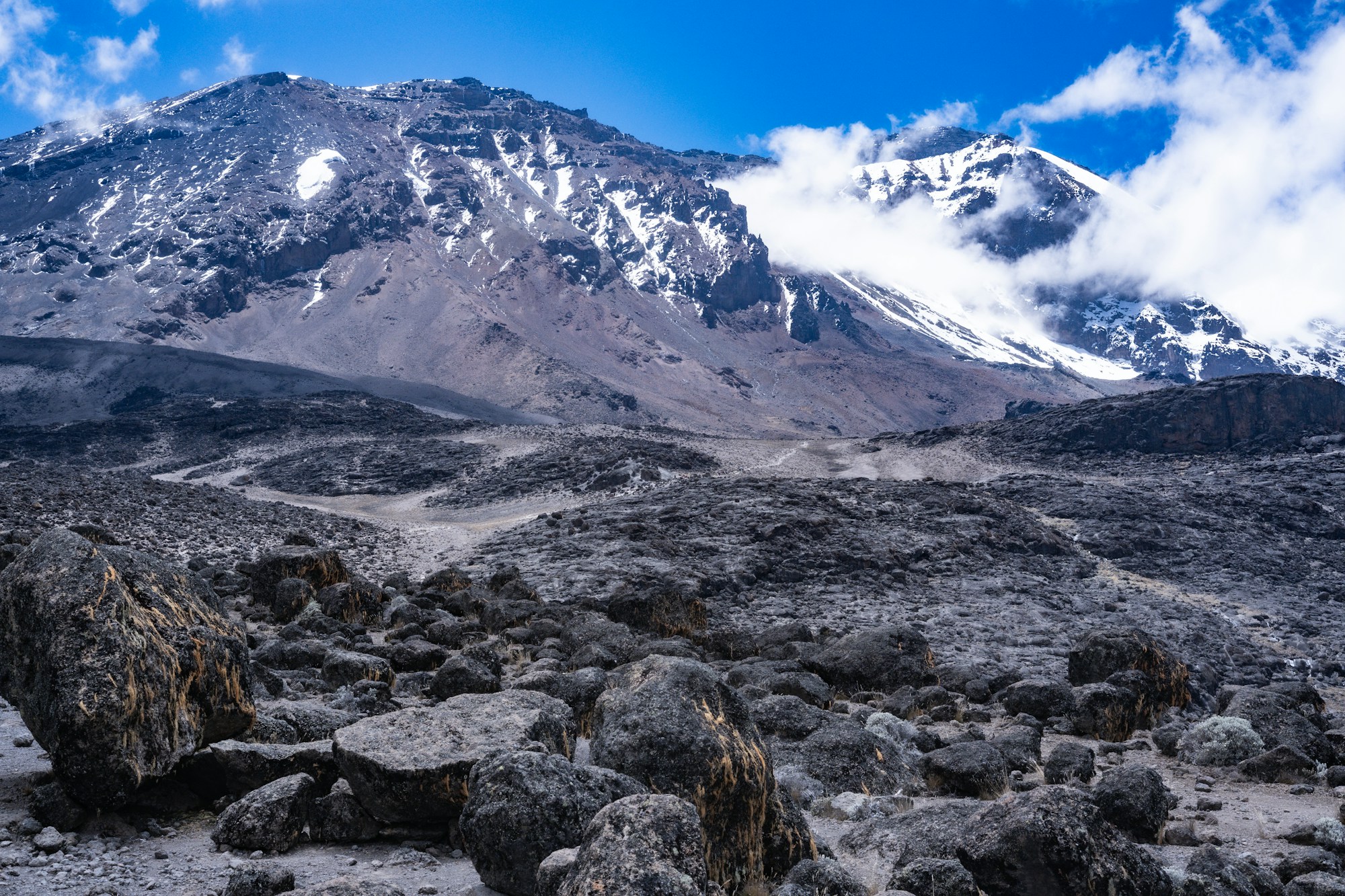
Kilimanjaro can be climbed year-round, but the driest, clearest conditions come in two windows.
Pair your climb with a short safari afterwards — tired legs, wild animals, and a well-earned rest.
No. Kilimanjaro is a high-altitude trek, not a technical climb. Good fitness, the right route and a steady pace matter far more than experience.
Altitude sickness happens when the body struggles to adapt to lower oxygen levels. Longer routes, a slow pace, plenty of water and experienced guides who monitor you daily all reduce the risk.
Porters carry the main equipment, tents and food. You carry a day pack with water, snacks, layers and your camera.
Yes — it's one of the most popular combinations. The national park gates are within a few hours of Arusha, the starting point for northern Tanzania safaris.